Connectivity in the Box: Auditing Embedded SIMs Before the Hardware Estate Outgrows Its Contracts

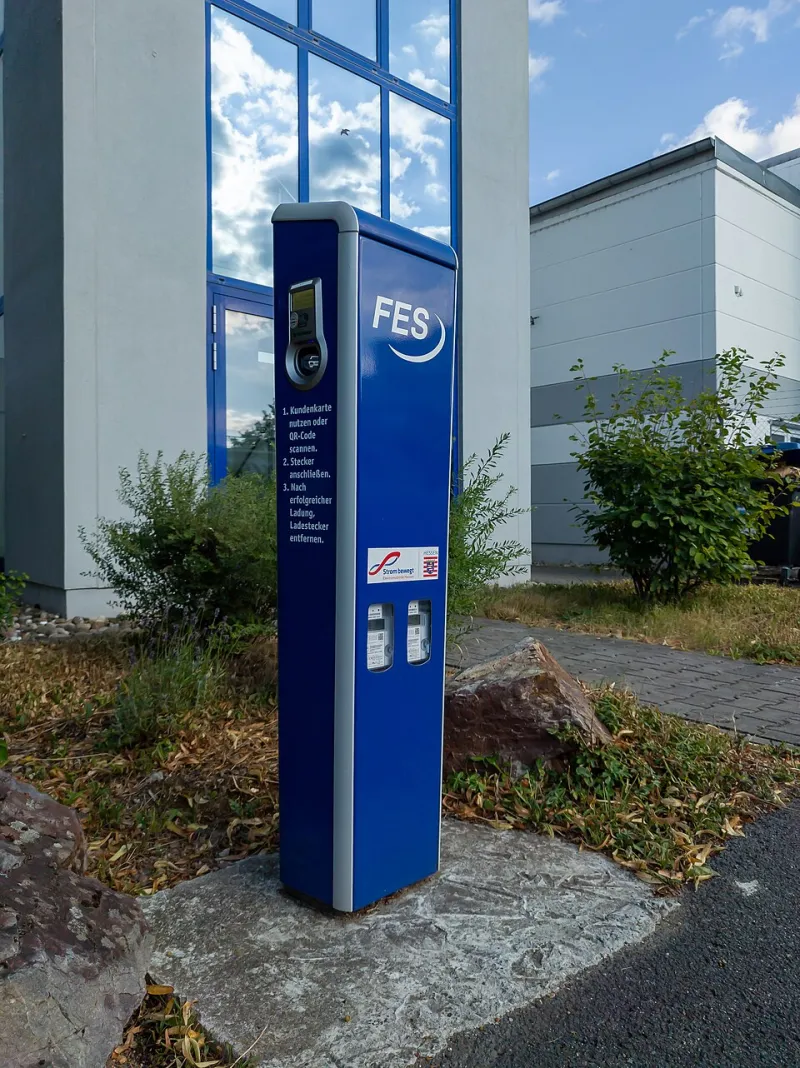
Photo: Edwardpultar, CC BY-SA 4.0, via Wikimedia Commons
A facilities team orders forty EV charge points; an operations manager specifies digital signage for six sites; a warehouse buys handheld scanners with a data plan bundled in. In each case the hardware arrives with connectivity already inside it, on terms negotiated by the manufacturer rather than the buyer's telecoms team. The result is a parallel connectivity estate, invisible to the IT asset register, contracted to parties the procurement function has never met.
The SIM you did not buy
Embedded SIMs — eSIMs and their soldered MFF2 predecessors — are now standard in equipment that once shipped without any network dependency. The commercial model varies: some vendors bundle a fixed data allowance for a defined period; others sell hardware cheaply and recover margin on multi-year connectivity; others resell a network operator's wholesale plan with a markup that is rarely itemised.
The procurement risk is not the SIM itself. It is that the connectivity term, the coverage commitment, the roaming rights and the end-of-life support are all set by a party whose interests align with the hardware sale, not with the buyer's estate.
Building the inventory
Start with the asset register, then assume it is incomplete. A practical inventory captures, per device class:
- the hardware supplier and model;
- the connectivity provider, including the underlying UK network where disclosed;
- the SIM form factor and whether it is removable or soldered;
- the data allowance, the billing basis (per device, per pool, per megabyte) and the overage rate;
- the contract start and end dates, and the auto-renewal terms;
- the roaming footprint and any permanent roaming restrictions;
- the support end date for the connectivity service, distinct from the hardware warranty.
The final two items are the ones most often missing, and the ones that cause the most expensive surprises.
Coverage is a claim, not a fact
A vendor's coverage map describes a theoretical footprint. What matters is performance at the specific sites where devices sit: a warehouse basement, a rural depot, a multi-storey car park. Ask for the network identity and test it — a small sample of devices, at the intended locations, over at least a fortnight, measuring attach success, latency and throughput at peak hours.
Where the vendor cannot disclose the underlying network, treat that as a material finding. It usually indicates a mobile virtual network operator arrangement with roaming onto a host network, which can bring different quality-of-service behaviour and different permanent roaming constraints.
Roaming and the rules that changed
For UK buyers, roaming is now a contractual question rather than a regulatory entitlement. EU regulation no longer applies to UK-issued SIMs, and roam-like-at-home in the EU is a commercial offer that must be written into the contract. Two practical constraints matter.
First, permanent roaming. Many EU networks restrict or surcharge SIMs that remain attached to a visited network beyond a defined period. A UK fleet of sensors deployed in Ireland or the Netherlands may be compliant on paper and non-compliant in practice.
Second, the data route. Traffic that leaves the UK and returns through a foreign gateway affects latency and, in some cases, data residency posture. For devices handling personal data, that is a UK GDPR question, not merely a technical one.
The term that outlives the hardware
Embedded connectivity contracts frequently run longer than the buyer expects. A three-year data plan attached to hardware with a two-year refresh cycle leaves a year of billing for devices that have been retired. Where the SIM is soldered, there is no option to swap it for a cheaper plan or a different network.
Negotiate three things before signature:
- A termination-for-convenience right at device decommissioning, or at minimum a pro-rata release from the connectivity term when a device is retired and certified destroyed.
- Price protection: a cap on renewal uplift, and a right to re-tender connectivity independently of the hardware.
- Portability where the SIM is removable: confirmation that the device is not network-locked, and that the access point settings can be changed.
The support cliff
Connectivity services carry end-of-life dates that do not always coincide with hardware support. A vendor may withdraw 2G or 3G connectivity years before the device itself fails, or retire the platform that manages the SIMs. Ask for the published support timeline in writing and map it against the estate's intended service life. For a ten-year building system, a five-year connectivity commitment is a renewal risk, not a solution.
Procuring the next wave
The estate will grow. The practical discipline is to make connectivity a named line item in every hardware purchase, with the supplier required to disclose provider, network, term, allowance, roaming terms and support dates on a standard schedule. Where the vendor refuses, the buyer has learned something useful before the purchase order is raised.
Embedded connectivity is not inherently poor procurement. It is simply procurement that has moved into a box and out of the contract file. The remedy is unglamorous: inventory, test, and write the exit into the deal.