Metering the Machine: How UK Boards Can See the Real Cost of AI Workloads
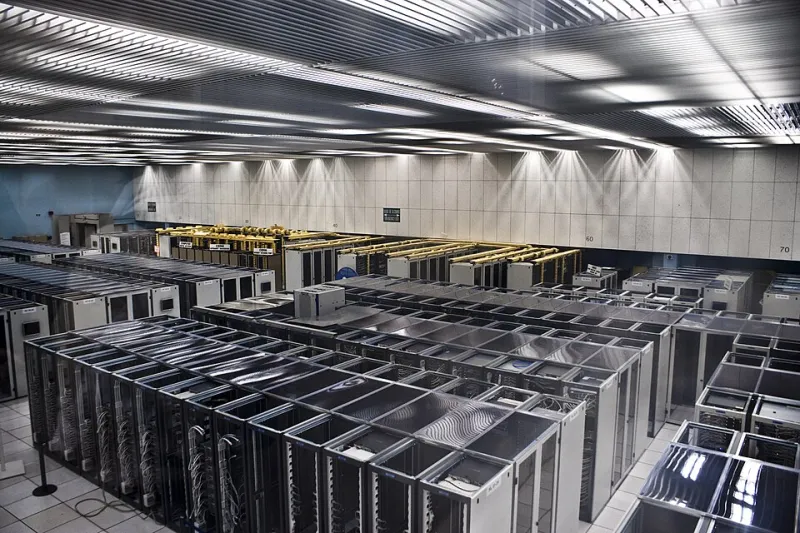
Photo: Florian Hirzinger - www.fh-ap.com, CC BY-SA 3.0, via Wikimedia Commons
AI is often presented to UK boards as a software subscription with an innovation label. The reality is less tidy. Every prompt, generated image, summarised meeting and automated decision consumes compute, storage, network capacity and energy somewhere in the supply chain. Some of that cost appears on a cloud bill. Some sits inside a vendor's per-seat price. Some is absorbed by a data centre and never reaches the finance team in a recognisable form. When pilots move into production, those hidden costs begin to matter.
Why AI Costs Behave Unlike Traditional Software
Traditional software licensing is relatively predictable. A firm buys a number of seats, deploys an application and pays a recurring fee. AI workloads add variable dimensions: inference requests, token volumes, model choice, latency requirements, retries, embeddings, vector storage and data egress. A pilot used by twenty people may look inexpensive. A workflow used by two thousand people, or one that calls a model thousands of times an hour, can behave more like a utility than a licence. The board does not need to understand every technical variable, but it does need a model that shows how usage turns into cost.
The Three Ledgers That Rarely Meet
Most UK organisations now run three related ledgers. Finance holds the budget and the vendor invoices. IT holds cloud consumption, platform charges and support effort. Sustainability teams hold energy and carbon estimates, often drawn from supplier data and spend-based factors. These ledgers rarely reconcile at the level of an AI workflow. A monthly bill may show a rise in cloud spend, but not which business process caused it. A sustainability report may include data-centre energy, but not the AI feature that drove demand. A vendor invoice may bundle the assistant into a broader platform fee, leaving no clear unit cost. Boards should ask for a shared view before the next rollout, not after the variance appears.
Metering From the First Pilot
The practical answer is to instrument early. Even a small pilot should have tags for business unit, application, environment and owner. Where the organisation controls the cloud estate, IT can use cost-allocation tags, budget alerts and log analysis to estimate cost per request or per active user. Where the AI capability is embedded in a vendor platform, the buyer should request usage reporting at a comparable level of detail. The aim is not perfect precision. It is a repeatable unit economics model: cost per workflow, cost per 1,000 requests, cost per active seat and cost per successful outcome.
Challenging Opaque Vendor Pricing
Procurement teams should test how an AI feature is priced before scaling it. Does the vendor charge per seat, per request, per token, per output or through a platform commitment? What happens when usage exceeds an allowance? Are there separate charges for storage, retrieval, data egress or premium model access? Can the vendor change model versions or pricing tiers during the term? UK buyers should ask for worked examples using realistic volumes, not headline rates. They should also seek audit rights, usage dashboards, notice periods for pricing changes and exit terms that allow a downgrade if adoption does not meet expectations.
Connecting Compute to Sustainability Reporting
AI compute has an energy dimension, but boards should be cautious about false precision. Data-centre efficiency, location, renewable-energy arrangements and supplier reporting all affect the estimate. The useful board question is not 'what is the exact carbon cost of this prompt?' It is 'which AI workloads are material, how are they growing and what evidence do we have?' Finance and sustainability teams can then align AI spend with existing energy and carbon reporting, including Streamlined Energy and Carbon Reporting where relevant. The same usage data that supports budgeting can support disclosure, provided the assumptions are documented.
A Shared Model for Finance and IT
The board agenda item should be a shared forecast, not a dispute between technology and finance. A monthly AI cost review can bring together invoice data, cloud consumption, usage metrics and business outcomes. IT explains the technical drivers; finance explains the budget consequences; the business explains the value. Scenario planning is essential: what happens to cost if adoption doubles, if a pilot is retired, if a vendor changes its pricing or if a model is swapped for a cheaper option? Guardrails such as budget alerts, approval thresholds and stop switches should be agreed in advance.
Before the Next Rollout
UK firms preparing another AI rollout in 2026 should ask four questions. Which workflows will consume variable compute? What unit cost will we track? Who owns the forecast when vendor and cloud bills diverge? And how will we report the energy and carbon implications without overstating certainty? If those questions cannot be answered, the rollout is not ready for scale.
AI can create genuine value, but it also creates a new class of operating cost that boards cannot afford to treat as invisible. Metering the machine is not an argument against innovation. It is the discipline that lets a UK organisation scale the tools that work, retire the ones that do not and explain the difference to finance, auditors and stakeholders.